How Automotive Injection Molding Shapes the Cars You Drive
Automotive injection molding is the backbone of modern vehicle manufacturing, delivering precision-engineered plastic components that replace heavier metal parts. The process forces molten thermoplastic into steel molds under high pressure, forming everything from dashboards to bumpers in seconds. This method slashes production costs while enabling complex geometries, superior surface finishes, and consistent part-to-part tolerances impossible with traditional fabrication.
- Precision Plastic Parts for Modern Vehicles
- Advancements in Tooling for Complex Geometries
- Lightweighting Strategies Through Advanced Polymers
- Surface Finish and Aesthetic Demands in Cabin Interiors
- Tight Tolerances and Quality Control in Safety-Critical Parts
- Sustainability in High-Volume Plastic Production
- Reducing Costs with Automated Post-Processing
- Future Trends in Electric Vehicle Component Manufacturing
- What Exactly Is Automotive Injection Molding and How Does It Work?
- Key Advantages of Using Injection Molding for Vehicle Components
- How to Choose the Right Process for Your Automotive Project
- Practical Tips for Optimizing Your Molded Auto Parts
Precision Plastic Parts for Modern Vehicles
Modern vehicles rely on precision plastic parts made through automotive injection molding for critical functions like sensor housings and fuel system components. These parts require tight tolerances to ensure proper fit and reliable operation under extreme heat and vibration, which the injection molding process delivers through controlled cooling and cavity pressure. For instance, a
0.1 mm deviation in a connector can cause electrical failure
, so molders use real-time monitoring to maintain consistency. The lightweight nature of these precision plastics also helps reduce overall vehicle weight without sacrificing durability, directly supporting fuel efficiency and performance.
How High-Pressure Molding Shapes Under-the-Hood Components
Under the hood, high-pressure molding forces molten resin into ultra-thin, complex geometries that withstand engine heat and chemical exposure. This process creates rigid air intake manifolds and coolant housings with zero porosity, preventing leaks under constant vibration. The extreme clamping pressure aligns long-fiber reinforced polymers precisely, yielding parts that resist warping at 150°C without adding weight. Every cavity is packed to eliminate voids, ensuring threaded inserts for sensors stay permanently sealed. The result: components that survive tens of thousands of thermal cycles without cracking.
High-pressure molding shapes under-the-hood parts by imparting dense, heat-resistant structures through intense material packing, enabling complex, leak-proof designs that endure extreme thermal and mechanical stress.
Material Choices That Withstand Heat, Vibration, and Chemicals
For modern vehicle precision parts, material choices must counter simultaneous thermal, vibrational, and chemical stressors. High-performance thermoplastics like PEEK maintain structural integrity above 250°C while resisting oils and coolants. Glass-reinforced nylon absorbs vibration through its crystalline structure, preventing fatigue cracks under hood. Polyphenylene sulfide (PPS) offers low creep under sustained heat and resists aggressive brake fluids. Polyetherimide (PEI) provides flame retardancy without sacrificing chemical resistance to fuel vapors. Formulators balance filler loadings to optimize thermal expansion rates against mating metal components, avoiding joint failure. Each selection prioritizes long-term seal integrity over cost per unit.
Advancements in Tooling for Complex Geometries
In the cramped tooling shops supplying the latest SUV interiors, the shift from traditional straight-pull molds is palpable. Conformal cooling channels, now routinely 3D-printed via laser powder bed fusion, snake directly around complex air vent vanes and taillight bezels, slashing cycle times by 25% while preventing the warpage that once plagued thin-wall cockpit trim.
One moldmaker, tackling a complex instrument-panel skeleton with deep, intersecting ribs, abandoned removable slides entirely; instead, they engineered a collapsible core that unscrewed hydraulically, allowing undercuts too severe for any conventional lifter.
This single hard-steel tool now produces a component previously requiring two separate molds, eliminating secondary welding and lowering per-piece scrap on tight-tolerance housings.
Multi-Cavity Molds and Hot Runner Systems
For complex automotive geometries like multi-port manifolds or sensor housings, multi-cavity molds with hot runner systems drastically boost throughput while maintaining part consistency. Hot runners keep the melt at a precise temperature from nozzle to gate, eliminating cold sprue waste and allowing direct gating into tight corners. This setup ensures balanced fill across all cavities for identical cycle times. A thermal gate design prevents freeze-off issues when molding intricate thin-wall electronics brackets.
Can hot runner systems handle high-temperature engineering plastics for under-hood components? Yes, they are engineered with specialized steel alloys and tip heaters to process materials like PEEK and PPA, ensuring no degradation in the manifold.
Cooling Channel Optimization for Faster Cycle Times
In automotive injection molding, conformal cooling channel design drastically reduces cycle times by following the exact contour of complex part geometries. Unlike straight drilled channels, additive manufacturing creates labyrinthine paths that eliminate hot spots and ensure uniform heat extraction. This targeted cooling often cuts cycle times by 20–40% for intricate components like intake manifolds or structural brackets. The practical sequence for optimization includes:
- Simulating heat distribution to identify thermal bottlenecks in the tool steel.
- Positioning channels within 5–7 mm of the mold cavity surface for peak thermal conductivity.
- Integrating beryllium copper inserts in high-heat zones to accelerate localized heat dissipation.
Properly executed, this approach prevents warpage and sink marks while enabling faster ejection, directly improving throughput per press.
Lightweighting Strategies Through Advanced Polymers
Lightweighting strategies through advanced polymers in automotive injection molding directly target mass reduction by replacing metal components with high-performance thermoplastics and composites. You achieve this by utilizing fiber-reinforced polymers like long-glass-fiber polypropylene, which deliver exceptional stiffness-to-weight ratios for structural parts such as front-end modules and door carriers. Foaming agents, introduced during the injection cycle, create a cellular core that slashes weight without compromising surface quality. Further savings come from thin-wall molding techniques, enabled by advanced flow materials that fill complex geometries at lower clamp pressures. The result is a tangible drop in vehicle mass, improving fuel efficiency and handling, all while maintaining impact resistance and dimensional stability. These practical substitutions streamline assembly by consolidating multiple metal parts into a single, lightweight injection-molded unit.
Replacing Metal with Reinforced Nylon and Polypropylene
Replacing metal with reinforced nylon and polypropylene in automotive injection molding reduces component weight by 30–50% while maintaining structural integrity. Glass fiber-reinforced nylon replaces steel in engine brackets and intake manifolds, offering creep resistance and thermal stability under hood. Polypropylene with talc or long glass fibers substitutes for metal in door modules and pedal systems, providing impact absorption and corrosion elimination. The process follows a clear sequence:
- Identify metal parts with tensile loads under 200 MPa and operating temperatures below 150°C
- Select fiber content (30–60% by weight) to match stiffness requirements
- Design ribbed geometries to compensate for lower modulus
- Optimize gate locations for uniform fiber orientation in load-bearing zones
This substitution directly eliminates secondary assembly steps, as molded-in features replace welded or bolted metal connections.
Gas-Assist and Foam Molding for Structural Parts
For structural automotive parts, gas-assist and foam molding create internal voids to cut weight while preserving rigidity. Gas-assist injects nitrogen into the polymer melt, hollowing out thick sections like door handles or roof racks without compromising impact strength. Foam molding introduces a chemical or physical blowing agent that expands into a cellular core, reducing density in load-bearing components such as engine covers or seat frames. This cellular structure also dampens vibration better FOX MOLD plastic injection mold manufacturer than solid parts, improving cabin acoustics. Both techniques eliminate sink marks and warpage by managing internal stress, allowing thinner walls that shed mass without losing structural integrity.

Gas-assist and foam molding hollow or foam structural parts, slashing weight while retaining mechanical stiffness and damping properties.
Surface Finish and Aesthetic Demands in Cabin Interiors
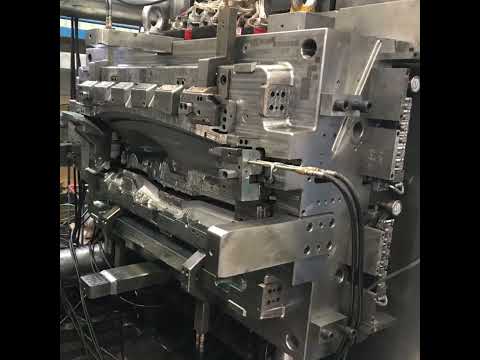
The cabin’s tactile story begins with the mold surface, where a precise texture etch transforms raw plastic into a soft-touch door panel. A grain that is too shallow reads as cheap; too deep, and it traps dust on the dashboard, ruining the premium illusion. To achieve zero-flow lines on a glossy center console, the steel must be polished to a mirror finish, and the melt temperature held within a 5°C window—any colder introduces blush, a milky haze that screams defect. *Q: How does a subtle grain hide common injection flaws? A: It scatters reflected light, optically blurring witness lines and sink marks that would otherwise betray the part’s core imperfections.* Every gloss level, from matte to piano black, dictates a distinct pressure and cooling profile so the final surface feels intentional, not molded.
Texture, Grain, and Color Consistency in Dashboard Components
Injection-molded dashboard components demand seamless surface finish integration across texture, grain, and color. Molds with precise EDM texturing replicate uniform grain patterns, preventing visual mismatches under varied lighting. Consistent color is achieved through controlled pigment dispersion and calibrated melt temperatures, eliminating streaking or shade variation between adjacent panels like the center stack and glove box door. Any deviation in grain depth or hue disrupts the perceived quality of the cabin, making process repeatability critical. Gate placement and cooling rates are optimized to avoid flow lines or sink marks that distort texture. Final inspection under multiple light angles verifies that grain orientation and color remain uniform across all dashboard sections.
Texture, grain, and color consistency in dashboard components rely on precise mold texturing, controlled pigment dispersion, and optimized cooling to ensure uniform visual-tactile harmony across the entire instrument panel assembly.
Advanced Mold Texturing for Soft-Touch Surfaces
Advanced mold texturing for soft-touch surfaces achieves a tactile, premium feel by chemically or laser-etching microscopic patterns onto tool steel, which transfers a velvety, non-slip grain to the final polyurethane or TPE-overmolded part. This process eliminates the need for secondary coatings, as the surface finish directly integrates softness through precisely controlled depth and roughness, ensuring consistent haptic response across complex geometries. A matte, fine-wrinkle texture, for instance, can mask minor flow lines while providing a warm, suede-like grip on door armrests.
Tight Tolerances and Quality Control in Safety-Critical Parts
In automotive injection molding for safety-critical parts, holding micron-level tolerances is non-negotiable. Here, six-sigma process control governs every cycle, using real-time cavity pressure sensors and CMM verification to catch deviations before a single defective component leaves the mold. This precision ensures airbag housings and brake booster housings mate perfectly under crash loads, where a 0.05mm variance could mean system failure. Quality control integrates automated vision systems on the press line, scanning for flash, sink marks, or dimensional drift immediately. The focus remains on predictable repeatability, ensuring every batch replicates the exact performance envelope, directly linking mold steel quality and temperature regulation to part integrity.
Real-Time Monitoring and Defect Detection Systems
Real-time monitoring and defect detection systems are essential for maintaining automated inline quality assurance in automotive injection molding. These systems use high-speed cameras and laser sensors to immediately flag dimensional deviations, sink marks, or flash as parts exit the mold. By halting production the moment a non-conforming component is detected, they prevent defective safety-critical parts from moving downstream. This approach eliminates the need for secondary inspection and reduces scrap rates.
- Vision systems compare each part against a CAD model to detect micron-level anomalies instantly.
- Process sensors monitor cavity pressure and temperature to predict and prevent defects before they occur.
- Closed-loop feedback adjusts injection parameters automatically when deviations are detected.

Process Validation for Airbag Housings and Sensor Brackets
Process validation for airbag housings and sensor brackets focuses on demonstrating that injection molding parameters consistently produce void-free, dimensionally stable parts within micron-level tolerances. This requires first-article inspection (FAI) and capability studies (Cpk ≥ 1.67) across multiple production runs. Mold temperature validation ensures uniform fill without stress concentrations that could cause brittle failure. Gate freeze time is calibrated to prevent sink marks on critical mounting surfaces. For sensor brackets, validation includes real-time cavity pressure monitoring to confirm consistent density at weld lines. Each validation protocol must document cycle-by-cycle data for every cavity, linking clamp force, melt temperature, and hold pressure to part integrity.
Process validation for airbag housings and sensor brackets ensures that every molded unit meets its functional requirements by statistically proving process stability under worst-case production conditions.
Sustainability in High-Volume Plastic Production
Sustainability in high-volume plastic production for automotive injection molding hinges on material choice and closed-loop processes. Using post-consumer recycled (PCR) polypropylene reduces virgin resin demand without sacrificing part durability for interior trim or underhood components. A critical win is designing molds for single-material components, which simplifies recycling at end-of-life by avoiding mixed-polymer contamination. Process optimizations like electric all-in-one molding machines cut energy use per cycle by up to 50% compared to hydraulic presses. Regrinding sprue waste and defective parts back into the feed stream eliminates landfill disposal. Adjusting cooling channels for shorter cycle times further lowers power consumption. The focus stays on reducing waste and carbon footprint directly through tooling and resin decisions, not offsets.
Closed-Loop Recycling of Scrap Material
In automotive injection molding, closed-loop scrap reclamation directly regrinds and re-feeds sprues, runners, and rejected parts into the same production cycle without downcycling. This requires precise segregation by polymer grade and color to avoid property degradation. Material is granulated to a controlled particle size, then blended with virgin resin at a verified ratio—typically 15–30%—ensuring consistent melt flow and mechanical performance for structural components like brackets or interior trims.
- Processors must monitor viscosity shifts in regrind batches to adjust injection parameters.
- Contaminant removal via metal detectors and air classifiers is mandatory before reintroduction.
- Closed-loop systems demand dedicated silos and gravimetric blenders for precise dosing.
- Moisture content in regrind must be dried below 0.02% to prevent splay defects.
Bio-Based Resins and Their Performance in Motor Mounts
Bio-based resins now deliver the necessary vibration damping for motor mounts in high-volume automotive injection molding. These materials, often derived from castor or rapeseed oil, achieve Shore D hardness ratings of 60-70, matching conventional polyurethane. Their performance sequence includes:
- Enhanced fatigue resistance under cyclic engine loads due to flexible polymer chains.
- Thermal stability up to 130°C, preventing deformation near the engine block.
- Consistent torque retention, reducing bolt loosening during acceleration cycles.
Precise mold cooling adjustments allow cycle times under 60 seconds, making them viable for mass production without compromising mount longevity.
Reducing Costs with Automated Post-Processing
In automotive injection molding, reducing costs with automated post-processing directly targets labor-intensive tasks like deflashing, gate cutting, and surface finishing. By deploying robotic cells with vision-guided trimming, you eliminate manual rework and its associated scrap rates, which typically account for 15–20% of molded-part cost. Automated systems also maintain consistent cycle times for secondary operations, preventing bottlenecks that force press downtime.
Integrating automated degating and inspection into the molding cell cuts per-part cost by eliminating separate handling and storage between molding and assembly.
This approach reduces the required floor space for buffer inventory and rework areas, lowering overhead. The key is programming the automation to adapt to normal die wear, so you avoid costly, manual adjustments between mold maintenance cycles.
Inline Robotic Trimming and Deburring
Inline robotic trimming and deburring automates the removal of flash and excess material directly within the injection molding cell, eliminating post-mold secondary operations. For automotive parts, this reduces cycle cost per part by immediately processing components while they are still precisely fixtured. A six-axis robot equipped with compliant end-of-arm tooling uses real-time force sensing to shear off gate vestiges and edge burrs without damaging complex geometries. This inline method slashes manual labor, reduces rework from misaligned trims, and prevents part damage from transferring heavy components. The robot’s adaptive path planning compensates for minor mold wear, ensuring consistent flash removal across thousands of cycles.
Q: How does inline trimming handle dashboard components with film inserts without delamination? A: The robot uses a low-speed orbital blade with ultrasonic vibration feedback, which severs the polypropylene flash cleanly at the bond line without transferring heat or shear force to the film layer.
Integrated Vision Inspection for Flash-Free Output
Integrated vision inspection eliminates the secondary cost of manual flash removal by detecting micro-burrs immediately after ejection within the molding cell. High-resolution cameras analyze each automotive component against a programmed acceptable geometry, triggering instant reject signals for parts with excess material. This real-time sorting prevents defective flash-bearing parts from entering downstream assembly, saving rework labor and scrap disposal expenses. The system’s closed-loop feedback can also adjust clamping pressure or venting parameters between cycles to reduce flash recurrence. Automated defect sorting here directly preserves production yield by ensuring only verified, flash-free parts proceed to painting or subassembly stations.
Future Trends in Electric Vehicle Component Manufacturing
Future trends in electric vehicle component manufacturing are fundamentally reshaping automotive injection molding. The shift toward lightweighting drives the adoption of high-performance thermoplastics and advanced foam injection processes to produce battery enclosures and structural parts. Molding techniques are evolving to integrate metal inserts and cooling channels directly into components, eliminating secondary assembly. Furthermore, biomimetic design principles are being applied to mold complex lattice structures for heat sinks and crash management. Predictive simulation software is becoming standard to optimize material flow and minimize warpage in large, thin-wall EV parts. The focus is on achieving dimensional stability and thermal management within a single, high-volume molded part.
Molding for Battery Enclosures and Connector Systems
In electric vehicle component manufacturing, high-precision injection molding for battery enclosures demands materials that balance flame retardancy with thermal conductivity to manage heat dissipation from cells. Connector systems require tightly controlled shrinkage and dielectric properties to maintain signal integrity under vibration. Mold designs must account for dissimilar wall thicknesses: thick sections in enclosures need slow cooling to prevent warpage, while thin connector walls demand high-speed filling for complete cavity replication. Multi-cavity tooling with hot runners ensures consistent density across connector pins, whereas large enclosure tools often incorporate sequential valve gating to manage weld line placement.
| Feature | Battery Enclosures | Connector Systems |
|---|---|---|
| Primary challenge | Warpage control in large parts | Flash prevention in micro-features |
| Gate type | Valve-gated sequential | Submarine or pin-point |
| Cooling priority | Uniform temperature distribution | Rapid cycle for thin walls |
Heat Management Solutions for Power Electronics Housings
In electric vehicle component manufacturing, injection molding is advancing heat management solutions for power electronics housings through material innovation. Thermally conductive plastics, infused with ceramic or graphite fillers, are replacing metals to dissipate heat directly from IGBTs and inverters. Overmolding these housings with integrated cooling channels eliminates secondary assembly, while liquid-crystal polymers offer high thermal stability for direct contact with hot components. Integrated thermal interface features are molded into housings to reduce reliance on separate pads or pastes. How do injection-molded housings improve heat dissipation? By incorporating conductive fillers and molded-in heat sinks, they create a direct thermal path from the power electronics to the ambient environment, lowering junction temperatures without added weight.
What Exactly Is Automotive Injection Molding and How Does It Work?
The Core Process: Melting, Injecting, and Cooling for Car Parts
Common Thermoplastics Used in Vehicle Component Molding
How Molds Are Designed for Precision Automotive Parts
Key Advantages of Using Injection Molding for Vehicle Components
High Strength-to-Weight Ratio for Fuel-Efficient Parts
Exceptional Surface Finish Without Secondary Operations
Ability to Create Complex Geometries in a Single Shot
How to Choose the Right Process for Your Automotive Project
Deciding Between Thermoplastic vs. Thermoset Materials for Durability